
Accueil > Newsfeed > Chicago's housing market sees more buyers, possibly higher prices this (…)
Chicago's housing market sees more buyers, possibly higher prices this year, experts say
vendredi 30 janvier 2026, par
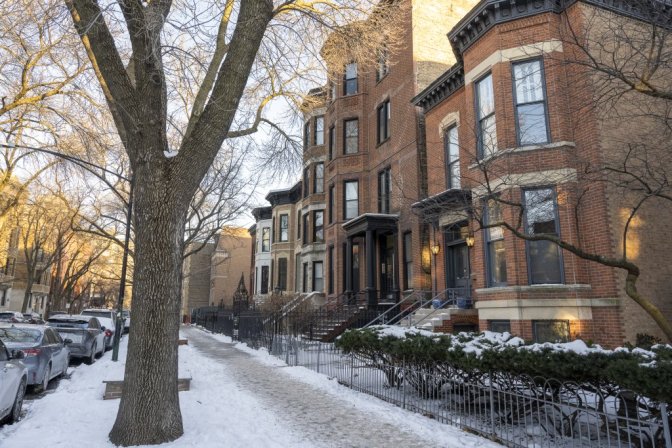
The housing market usually slows down in the winter, due to the holidays and frigid weather.
But Grigory Pekarsky, co-owner of Vesta Preferred Realty, has done more deals in January than some agents do in a year. Pekarsky said he's sold more than 70 homes, and it’s coming off the coattails of a busier-than-usual December, he said.
“The market just completely opened up, and it started to pace fast in early December,” Pekarsky said. “I was like, ‘This is going to be a really, really interesting start to the year.’ And it has been.”
In the greater Chicago region, home sales in 2025 rose slightly by 0.6% year over year, with nearly 89,100 homes sold, according to Illinois Realtors. In 2024, 88,560 homes sold in the region. Meanwhile, home sales across Illinois grew by 4.2%, compared to 2024, when 131,194 homes sold that year.
For December, the Chicago metro area saw 6,637 homes sold, down 0.2% from December 2024 sales of 6,650. Across the state, home sales in December were up 2% year over year, with 10,237 homes sold, according to the trade association.
Housing experts and economists are predicting that 2026 will be a stronger year for the U.S. housing market. Economists from the National Association of Realtors predict that affordability will improve, along with home value appreciation. Zillow forecasts a 4.3% increase in home sales, along with modest price growth in many parts of the U.S.
But Chicago will likely tell a different story. Though home sales remain strong, a dwindling number of listings combined with steady demand means more competition among buyers, which could motivate sellers to raise prices.
The median sale price for a Chicago home rose more than 5% last year to $375,000, according to Illinois Realtors. Over the past seven years, median home prices have been spiking to new highs, during the peak homebuying season around June. Between 2019 and 2026, the peak median home price rose from $265,000 to $385,000 — a 45% jump.
At the federal and local level, housing affordability has already cemented itself as a central talking point in 2026. On Jan. 20, President Donald Trump signed an executive order to block private equity and institutional investors from purchasing single-family homes, as part of a larger campaign to make buying a home more accessible.
In Chicago, developers broke ground Jan. 6 on the first project under the city’s Missing Middle Infill Housing initiative that aims to provide more market-rate homes, which have disappeared across Chicago due to historic disinvestment.
While experts said Chicago might see small, incremental improvements in the housing market this year, many said affordability and a lack of homes will define 2026.
"In Illinois, the issue is very acute in the sense that our housing economy hasn't recovered in the same manner that other states have,” Illinois Realtors CEO Jeff Baker said. “Housing stability, housing affordability, the trickle down affects every other element of our state from economic development to school funding, public safety. It touches everything.”
‘In front of our eyes’
Baird & Warner, Illinois' largest family-owned independent real estate services company, had a strong start to 2025 but demand leveled off. Baird & Warner Chief Strategy Officer Laura Ellis said the firm expects more of the same this year.
Forecasts call for price softening, but Ellis said Chicago will likely continue to depart from national housing trends. That’s in part because the Midwest market is slower to react to economic changes than its coastal counterparts.
Baird & Warner predicts homeowners will see their home values rise this year. It also predicts home listings will continue to be snapped up quickly, with the average number of days on market virtually unchanged. Homes in the Chicago metro area are on the market for an average of 29 days until they're sold, according to Illinois Realtors.
The Midwest continues to be a strong part of the housing market, with Chicago leading the way, according to Daryl Fairweather, chief economist at Redfin. But because the Midwest missed the construction boom during the COVID-19 pandemic, it has faced inventory problems, especially as construction costs climb.
“Builders haven't seen the Midwest as a place that is growing in population or demand for housing,” Fairweather said. “Demand has been strong in Chicago, but it's been even stronger in other parts of the Midwest. People are leaving Chicago for surrounding areas — for Milwaukee, for Indiana — and [are] still commuting, especially with remote work or hybrid work being an option for people.”
Fairweather predicts Chicago will outpace the rest of the country on price growth. Its affordability compared to other parts of the country, coupled with supply constraints, will likely drive prices faster.
News and research firm Resiclub found that inventory levels in 17 states, like Colorado and Texas, are now above their 2019 pre-pandemic levels. Illinois wasn’t among them.
Resiclub found the number of homes for sale in Illinois between December 2019 and December 2025 was down 58%. And home prices jumped 43%, between March 2020 and November 2025.
Pekarsky said Chicago’s housing inventory crunch is even more dire for first-time homebuyers, who often can’t compete with all-cash offers and buyers who have built up equity.
“Where you're seeing a lot of people win are the people that have cash,” he said. “The first-time home buyers that need 5% down or 3% down, they're getting squeezed. They're the ones that are renting, and they're the ones whose rents are going way up. The affordability crisis is happening in front of our eyes, and it's because cash is winning and beating people out.”
Grigory Pekarsky, co-owner of Vesta Preferred Realty, outside one of his listings in Lake View.
Zubaer Khan/Sun-Times file
What could improve the market
Sam Sharp, regional executive vice president at CrossCountry Mortgage, said the lender is seeing more clients who are trading up — a welcome sign as it means their smaller home can be listed, which helps address Chicago’s inventory issue.
“You have to remember that the home that you're selling is the answer to someone else's ask,” Sharp said.
What could also help boost inventory is a drop in mortgage rates, Fairweather said. She predicts rates will drop to about 6.1% by the end of 2026.
The benchmark 30-year fixed rate mortgage rate rose to 6.1% from 6.09% last week, mortgage buyer Freddie Mac said Thursday. One year ago, the rate averaged 6.95%.
Fairweather said lower mortgage rates can help increase a buyer's purchasing power. It can also draw out homeowners with pandemic-era mortgage rates, that were around 3%, into the market.
“There are lots of people who bought homes during the pandemic who are dissatisfied with them now, would like to sell and buy again, but it's too expensive for them to do that because of the mortgage rate difference,” Fairweather said. “The mortgage rates decline helps free up both inventory homes for sale and demand.”
Nearly 69% of U.S. homes with an outstanding mortgage have a fixed-rate of 5% or lower, and slightly more than half have a rate at or below 4%, according to Realtor.com.
Illinois Realtors predict 2026 will be another tight year for the housing market. The trade association wants to advocate for more housing-related policies at the state and local level, and it’s beefed up its housing advocacy team. An area of focus is measures that could help boost housing production, such as accessory dwelling units .
“We need to actually see real action in the legislatures,” Baker said. “We need to see action in city halls, mayors and everything in between.”
What to know before you buy
Marquetta Jackson, a HUD-certified housing counselor at YWCA Metropolitan Chicago, is encouraged by the slight downturn in interest rates. But she said participants in the nonprofit’s housing workshops know it’s still a tight market.
Jackson said one of the top concerns buyers have is if now is the right time to purchase a home.
YWCA, whose mission is to eradicate racism and empower women, offers workshops such as credit repair, budgeting, foreclosure prevention, rental counseling and homelessness prevention. Its homebuyer education workshops are one of the most popular offerings.
“We want to remind people that there’s never really a perfect time, there’s only a prepared buyer,” Jackson said.
Sharp predicts the average mortgage rate will be in the 5.5% to 6% range this year. He advises potential buyers to be prepared because a rate drop will likely mean more buyers flooding the market.
One easy step is getting pre-approved for a mortgage.
“It's important to remember that your pre-approval is valuable,” Sharp said. “It has value, and it's a position because that's your proof of funds. You're telling the seller that this is your guarantee that come the day that you're looking to close, this will be a smooth transaction.”
In a tight housing market, Pekarsky recommends first-time buyers consider townhomes or duplexes. They’re typically priced cheaper than a single-family home while still offering space for family, he said.
Above all, give yourself time.
“Be patient in the process,” Jackson said. “The housing market in Chicago is tight, but there’s something out there for you.”
Voir en ligne : https://www.wbez.org/housing/2026/0...